

Indian Mango Crop Report 2026: Market Trends, Crop Analysis & Industry Outlook
The 2026 mango season in India presents a dynamic mix of challenges and opportunities for processors, exporters, and buyers. Based on the latest insights from ABC Fruits internal crop reports and field observations, this year’s crop is influenced by weather fluctuations, regional variations, and global market conditions.
ABC Fruits latest crop reports and on-ground assessments across key sourcing regions present a comprehensive and in-depth analysis of the 2026 mango season, covering Alphonso and Totapuri varieties, production trends, pricing outlook, and implications for the global food industry.
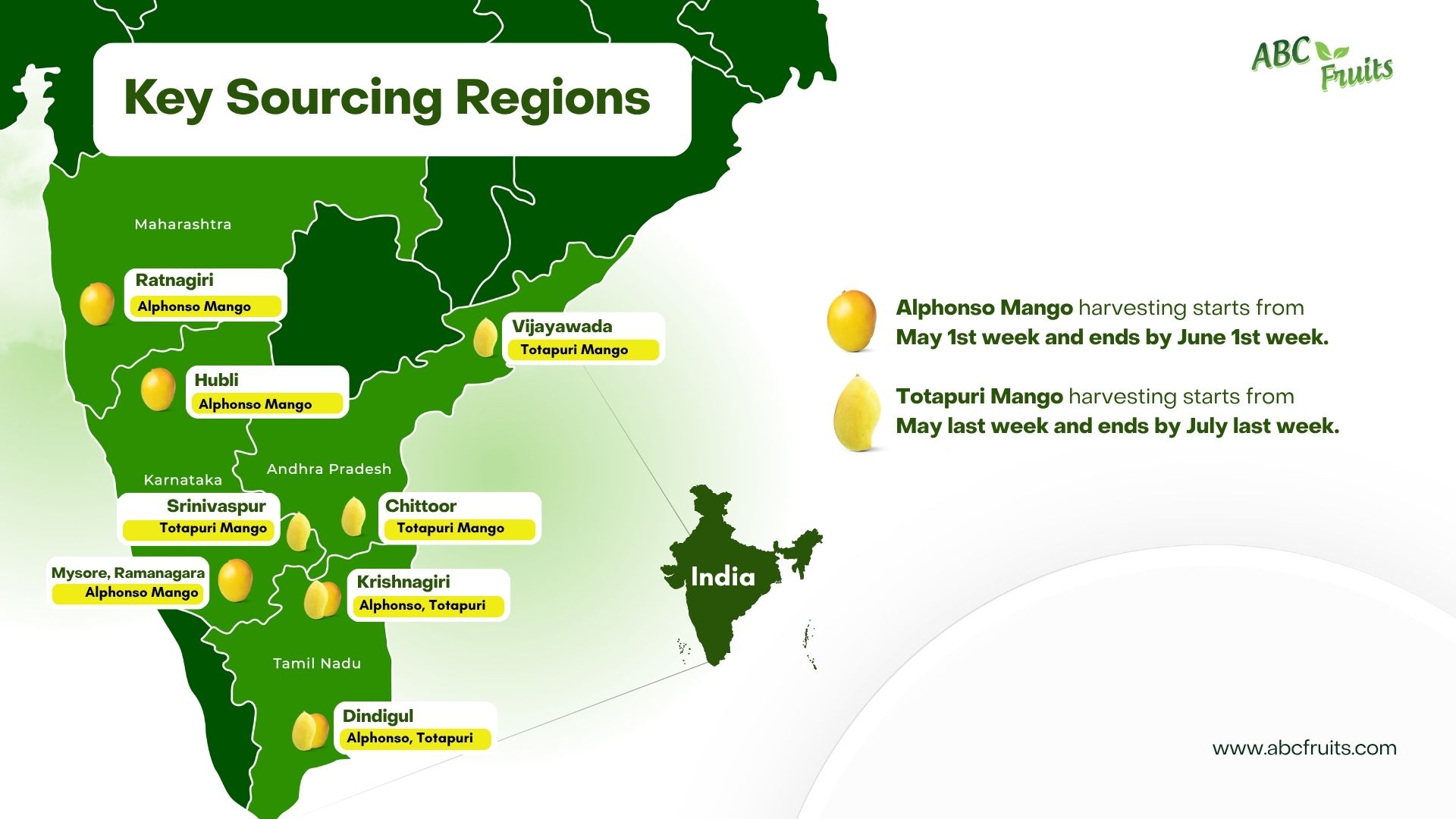
India’s Mango Sourcing Regions
India’s mango cultivation is geographically diverse, with each region contributing unique characteristics in terms of flavor, yield, and processing suitability. The 2026 season continues to rely on major sourcing belts across South and West India, which are critical for both domestic consumption and industrial processing.
India’s mango supply chain is deeply rooted in multiple sourcing regions:
Alphonso Mango:
- Tamil Nadu – Krishnagiri, Dindigul, Tirupattur
- Karnataka – Mysore, Ramanagara, Channapatna
Totapuri Mango:
- Tamil Nadu – Krishnagiri, Tirupattur, Dindigul
- Andhra Pradesh – Chittoor, Vijayawada, Srinivaspur
- Maharashtra – Ratnagiri, Devgad
Other hubs – Hubli and surrounding belts
Harvest Timelines (2026 Season)
The 2026 mango harvesting season this year is relatively compressed, particularly for Alphonso
Alphonso Mango
- Harvest Start: 1st week of May
- Harvest End: Last week of May
Totapuri Mango
- Harvest Start: Last week of May
- Harvest End: Last week of July
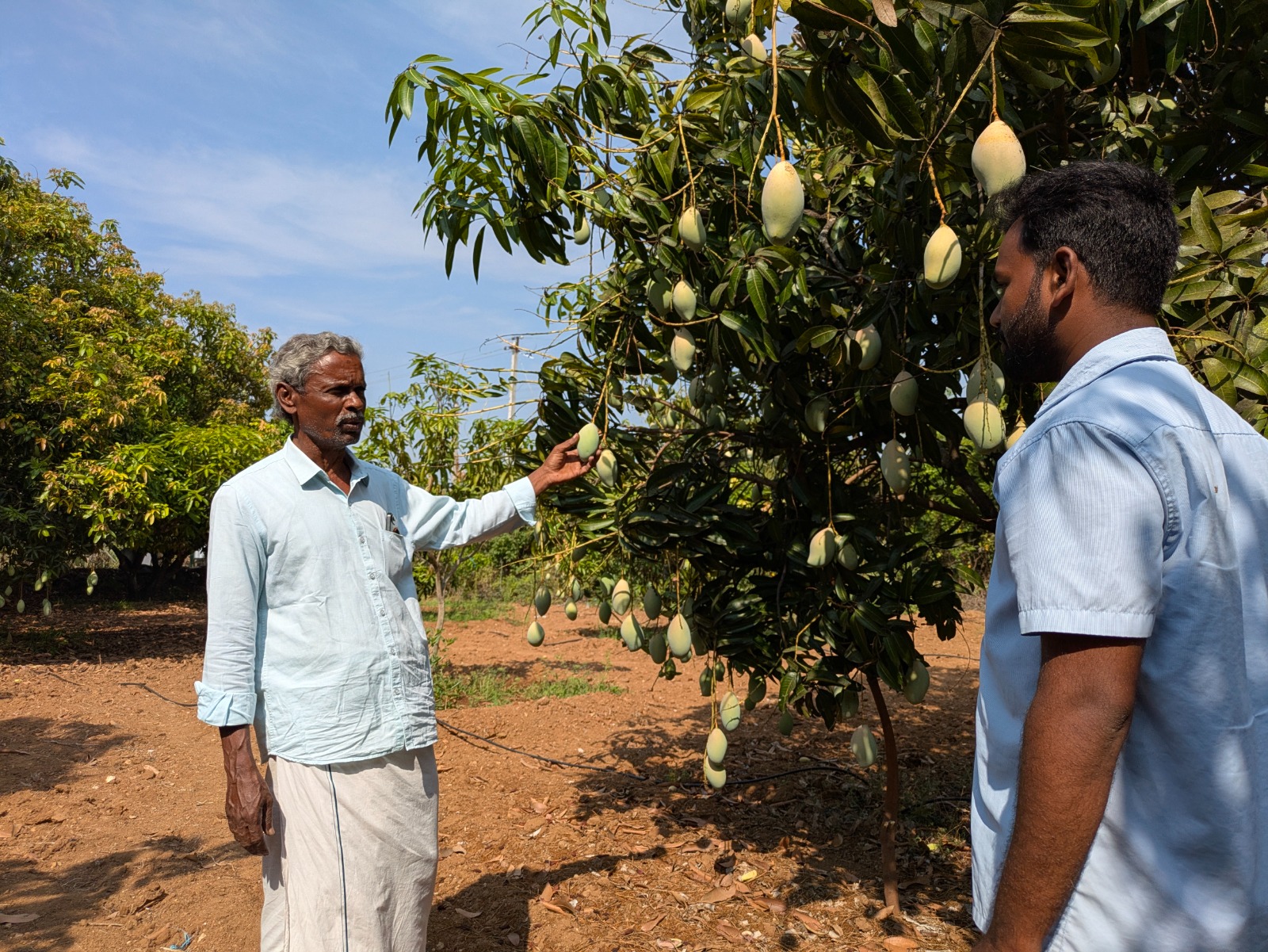
We are expecting a shorter harvest window for Alphonso, due to a single flowering cycle, as opposed to the staggered flowering seen in previous years. As a result, processors face shorter fruit procurement timelines, which could lead to increased competition for raw fruit, and potential operational bottlenecks.
Alphonso Mango Crop Analysis – 2026
Crop Performance Overview
The Alphonso mango crop in 2026 has been significantly affected by adverse weather conditions during critical growth stages. While the season initially began with promising flowering, the lack of rainfall combined with rising temperatures created unfavorable conditions for fruit setting.
During the flowering and early fruiting stages:
- High temperatures accelerated moisture loss
- Hot dry weather and Limited rainfalls led to flower and fruit drop
Comparison of Alphonso Growing Regions
The performance of Alphonso mango varies across regions:
- Maharashtra (Ratnagiri & Devgad)
This premium Alphonso belt has been severely impacted, with extreme weather conditions reducing both yield,fruit size. This year the western crop is facing challenges with very low fruit availability…, , in recent years. - Karnataka & Tamil Nadu
- Compared to western crop, Karnataka and Tamilnadu regions have shown relatively better resilience, primarily due to diversified cultivation zones and slightly more stable weather conditions. However, even here, production remains below last year’s levels.
From field observations:
- Tamil Nadu recorded moderate crop availability.
- Karnataka benefited from comparatively better rainfall distribution.
Yield & Availability
The overall Alphonso crop size is expected to be lower than last year.:
- Yield is expected to be: 20–30% lower than last year
- Key contributing factors:
- Heat stress during flowering
- Insufficient rainfall during fruit development
- High rate of fruit drop
This crop would be considered below average when compared to the bumper crop of the previous year.
Quality Outlook
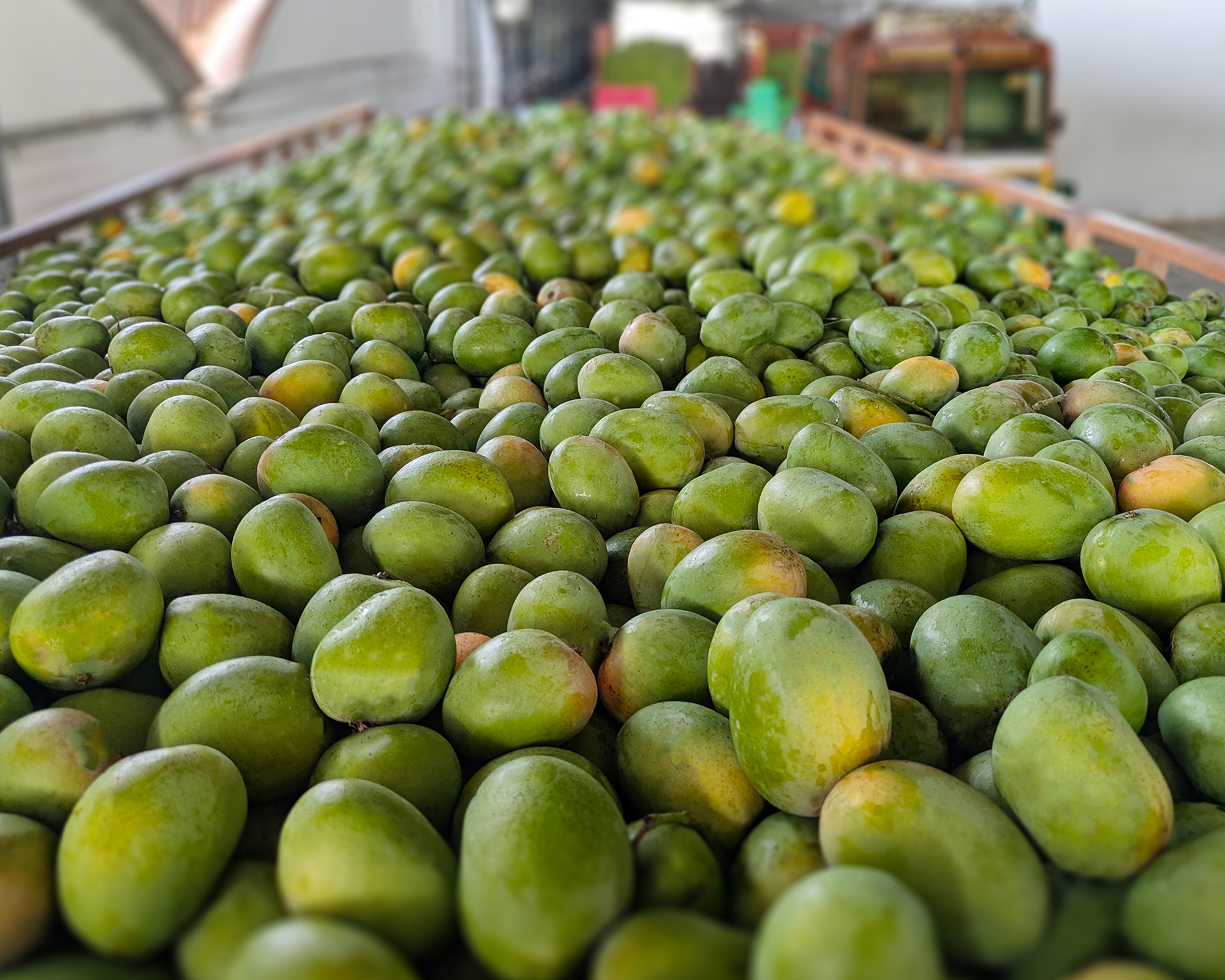
Despite lower yields, the quality of Alphonso mango is relatively positive.
Dry weather conditions have resulted in:
- Higher Brix levels, indicating increased natural sweetness
- More concentrated flavor profiles
- Enhanced brighter color,
However,
- Fruit size is smaller, impacting pulp recovery ratios
Price Outlook
The Alphonso market is expected to see slightly higher prices compared to the previous year.
- Price increase: 20–25% higher than last year
- Key drivers:
– Lower fruit availability
– Strong demand in fresh fruit markets
Fresh market demand, in particular, is absorbing a large portion of the available crop, leaving limited volumes for processing industries.
Totapuri Mango Crop Analysis – 2026
Crop Performance Overview
The Totapuri mango crop in 2026 is performing relatively better than Alphonso. This variety, widely used in pulp and concentrate production, has shown resilience due to lower pest pressure and better fruit setting.
One notable advantage this season:
- Reduced infestation of thrips and hoppers, has improved fruit formation
However, climatic constraints continue to limit overall production.
Regional Insights
- Andhra Pradesh
Emerging as the best-performing region this season due to relatively favorable weather conditions. It continues to be the backbone of Totapuri supply. - Tamil Nadu
Crop performance is weaker compared to last year due to insufficient rainfall during critical stages.
Across both regions:
- Fruit setting has been uniformly good
- Yield limitations are primarily weather-driven rather than pest-related
Yield & Availability
- Expected decline: 20–25% lower than last year
- Key reasons:
– High temperatures
– Lack of rainfall during flowering
– Stress during fruit maturation
Although the decline is significant, Totapuri remains more stable compared to Alphonso, making it the preferred choice for bulk processing.
Quality Outlook
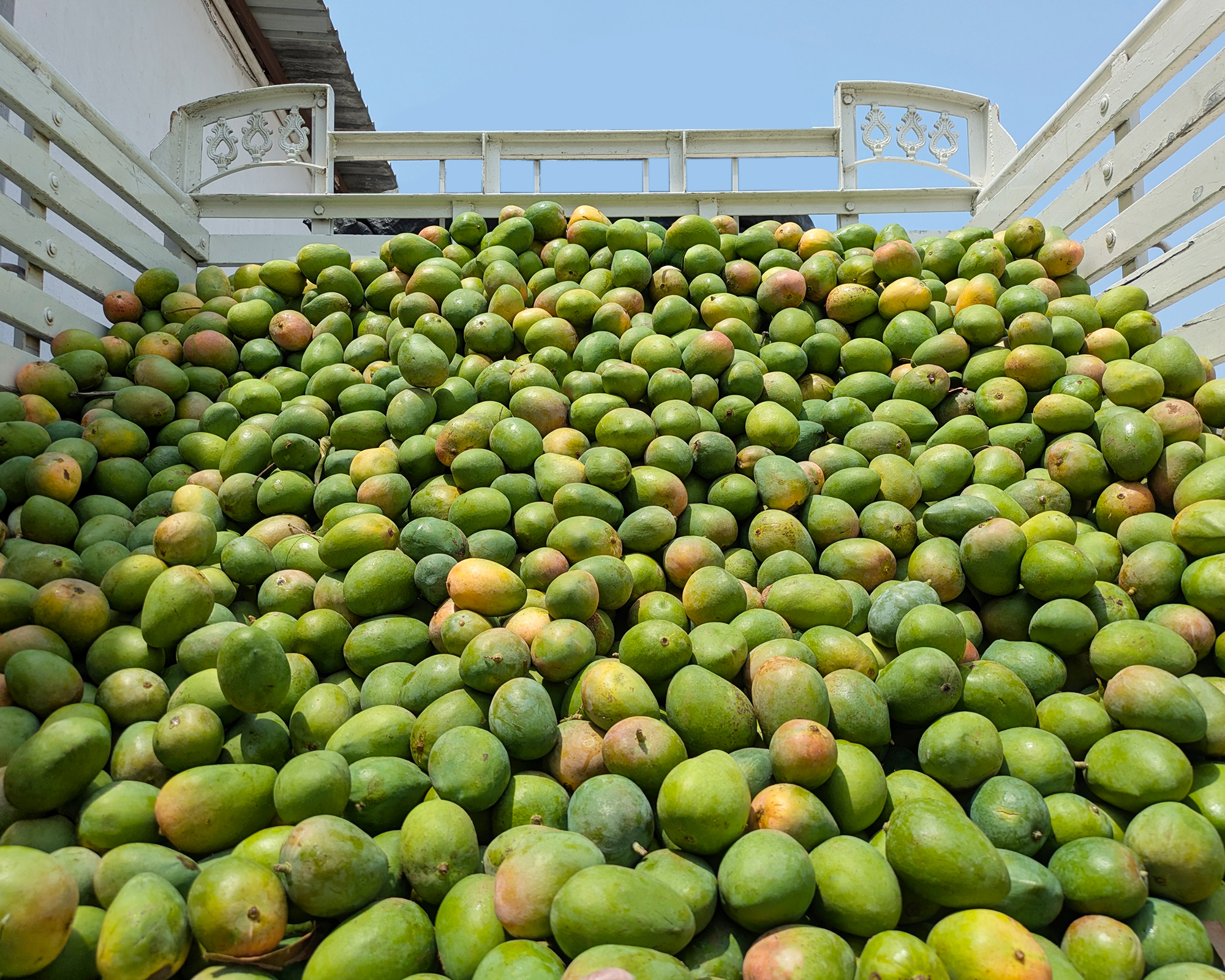
The quality outlook for Totapuri mango is balanced and moderately positive:
- Fruit size:
– Currently good
– Expected to improve further with rainfall in the next month - Brix levels:
– Currently average
– May decline if rainfall increases in the next month - Color and flavor:
– Expected to remain consistent to last year
Price Outlook
- Expected increase: 15–20% compared to last year
- Driven by:
– Reduced fruit availability
Totapuri continues to be a cost-effective alternative to Alphonso.
Key Industry Challenges in 2026
The 2026 mango season is not just defined by crop performance but also by a combination of external and structural challenges affecting the entire value chain—from farm-level production to global distribution. These challenges are interconnected and are significantly influencing pricing, availability.
1. Weather & Climate Impact
Climatic conditions have played a decisive role in shaping the 2026 mango crop, making weather one of the most critical challenges this season. The mango crop cycle is highly sensitive to environmental conditions, particularly during flowering and fruit setting stages.
This year, prolonged periods of high temperatures during flowering have caused stress on mango trees, leading to poor fruit retention. In addition, inconsistent and insufficient rainfall across key growing regions has disrupted the natural growth cycle.
As a result:
- Flowering was initially strong but could not sustain due to lack of rainfall
- Fruit setting was uneven, leading to significant fruit drop
- Overall yields declined due to poor fruit development
Another key concern is the lack of staggered flowering, especially in Alphonso, which has shortened the harvesting window and reduced the opportunity for yield recovery.
2. Rising Input Costs
In 2026, the mango processing industry is also facing intense cost pressures, with nearly every component of the supply chain becoming more expensive. These rising input costs are significantly impacting the final pricing of mango pulp and related products.
One of the major contributors is the sharp increase in packaging material costs, which have risen by approximately 30–40%. This includes aseptic bags, drums, cartons, and other essential packaging formats used in bulk and retail supply.
At the same time:
- Fuel and energy costs have surged, increasing transportation and processing expenses
- Labor costs have gone up due to inflation and workforce constraints with lack of labor
These cost increases are not isolated—they are cumulative and affect multiple stages:
- Farm-level operations (harvesting, handling)
- Processing (pulping, concentration, storage)
- Packaging and distribution
As a result, manufacturers are experiencing margin pressure, forcing them to pass on part of the cost to buyers through higher product pricing.
3. Logistics & Export Challenges
Global logistics has emerged as another major bottleneck in the 2026 mango season, directly affecting export-oriented businesses.
Freight rates have increased dramatically, with costs rising by 50–100%, particularly for shipments to key international markets. This surge is largely driven by geopolitical tensions and disruptions in global shipping routes, which have reduced container availability and increased transit times.
The impact is especially visible in major export destinations such as:
- Middle East – A key market for mango pulp and concentrate
- Europe – Strong demand but sensitive to price fluctuations
- North America – High-value market with strict supply timelines
Due to these disruptions:
- Shipment schedules have become less predictable
- Export lead times have increased
- Freight rates have increased the total costs
- Working capital requirements have risen due to delayed deliveries
In some cases, exporters are forced to either absorb higher freight costs or renegotiate contracts, both of which affect profitability.
4. Demand-Supply Imbalance
The 2026 season is witnessing a complex demand-supply scenario, where different segments of the market are behaving differently.
On one side, export disruptions and logistical challenges have slowed down the movement of processed mango products such as puree and concentrate. This has led to:
- Reduced short-term demand in certain export markets
- Accumulation of carryover stock in some regions
On the other hand, the fresh fruit market remains highly active and competitive. Strong consumer demand for fresh mangoes, especially premium varieties like Alphonso, is driving higher farmgate prices.
This imbalance has created a unique situation:
- Processors face difficulty in procuring raw materials at competitive prices
- Fresh market demand absorbs a large portion of available fruit
- Price discovery becomes more volatile and unpredictable
Overall, the industry is navigating a scenario where:
- Supply is constrained
- Demand is uneven
- Prices are influenced by multiple competing factors
Impact on Mango Processing Industry
For Buyers & Importers
- Expect higher FOB prices (20–30% increase)
- Need for early procurement planning to secure best rates and ensure availability throughout the year
- Possible supply constraints for premium varieties
For Processors
- Lower raw material availability
- Increased processing costs
- Focus on:
– Yield optimization
– Efficient sourcing strategies
ABC Fruits Product Portfolio
ABC Fruits continues to offer a wide range of mango-based products:

Purees & Concentrates
- Alphonso Mango Puree (16° Brix)
- Totapuri Mango Puree (14° Brix)
- Totapuri Mango Concentrate (28° Brix)
- Organic Alphonso Mango Puree (16° Brix)
- Organic Totapuri Mango Puree (14° Brix)
- Organic Totapuri Mango Concentrate (28° Brix)
- Alphonso–Totapuri blends
IQF & Cut Products
- Alphonso chunks & slices
- Totapuri Slices & dices (various sizes)
Packaging Options

- Aseptic drums (200+ kg)
- Bag-in-box (20 kg)
- Frozen packs (1–15 kg)
- Retail & custom packaging
Global stock availability is supported through warehouses in the USA, Europe, and Asia.
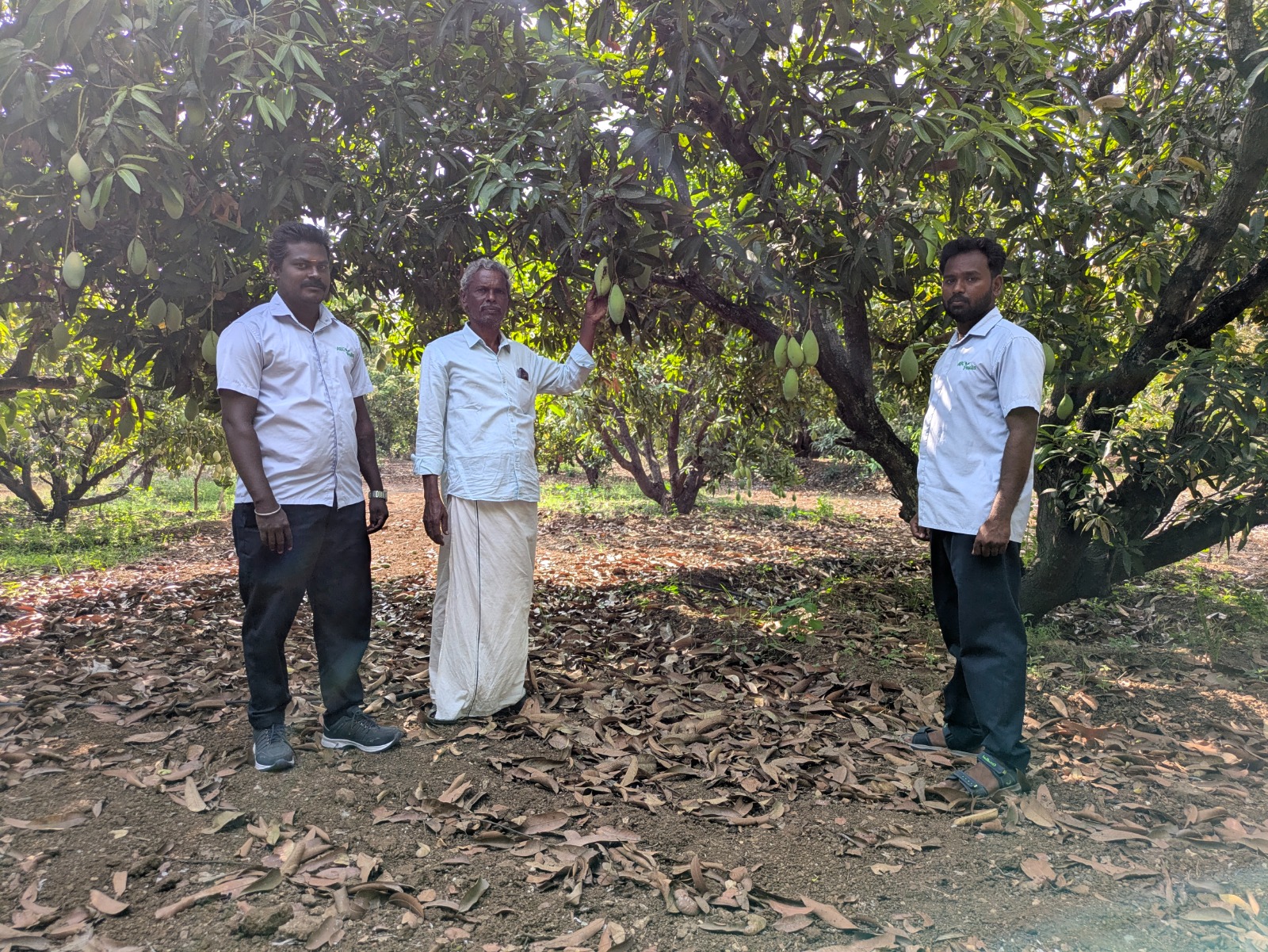
ABC Fruits Ground-Level Approach with Our Dedicated Agri Team
ABC Fruits strength lies in our deep-rooted agricultural expertise and strong field presence across key mango-growing regions.
Our dedicated Agri team works closely with farmers and sourcing partners to ensure consistent crop quality, yield visibility, and real-time intelligence throughout the season.
Key Capabilities:
- On-ground monitoring across Tamil Nadu, Karnataka, and Andhra Pradesh
- Continuous tracking of flowering, fruit setting, and crop development stages
- Advisory support to farmers on crop management and best practices
- Early identification of risks such as weather stress, pest activity, and fruit drop
Data-Driven Insights:
Our team gathers and analyses real-time field data to:
- Forecast crop availability and yield trends
- Assess regional variations in quality and output
- Provide timely updates to customers for better procurement planning
This integrated approach enables ABC Fruits to deliver not just products, but reliable market intelligence and supply assurance.
Conclusion: 2026 Market Outlook
The 2026 mango season is defined by lower production, higher costs, and evolving market dynamics. While challenges persist, opportunities remain for businesses that adopt a proactive and strategic approach.
Key takeaways:
- Crop yields are 20–30% lower across varieties
- Prices are expected to rise based on crop conditions
- Alphonso offers premium quality but limited supply
- Totapuri remains the backbone of processing industry
Despite the constraints, the 2026 season reinforces the importance of India’s mango industry as a global leader in quality and supply.